Experience Hindustani Music in a Whole New Way
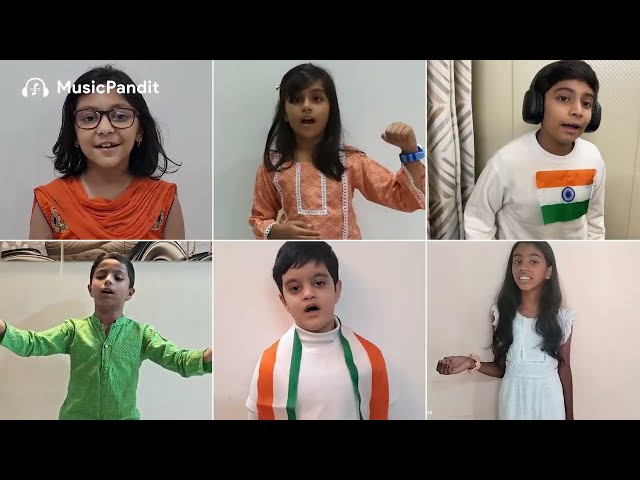
Explore the timeless art of ragas and taals through live, guided vocal training from certified instructors. Introduce your child to the rich heritage of Hindustani vocal music with Music Pandit’s engaging and age-appropriate Hindustani music classes online. Whether your child is a complete beginner or ready to explore advanced techniques, our Hindustani classical vocal classes make learning accessible, interactive, and joyful- from the comfort of your home.
Raga-based Curriculum
Certified Hindustani Teachers
Live Sessions
Raga-based Curriculum
Certified Hindustani Teachers
Live Sessions
Raga-based Curriculum
Certified Hindustani Teachers
Live Sessions
Raga-based Curriculum
Certified Hindustani Teachers
Live Sessions
Indian classical singing helps children develop discipline, focus, emotional expression, and a deeper connection to culture. Hindustani music, with its intricate ragas and rhythmic patterns, sharpens a child’s listening skills and enhances creativity. At Music Pandit, our Hindustani classical vocal classes blend tradition and technology – helping students master foundational ragas, voice control, and improvisation through live online sessions.
Learn Alap, Bandish, and Taal fundamentals
Understand Raga structure and voice modulation
Guided performance reviews by experienced gurus
Small groups and Flexible learning for kids
Attend live classes with real-time feedback.
Experience the guru–shishya approach through a digital classroom.
Beginner to advanced progression with certifications.
weekly live interactive sessions with personal attention and feedback
Regular student and parent feedback sessions
The Initial stage provides a deeper exploration of ragas, theory, and taals while reinforcing earlier learning. Students now begin to connect concepts with practice, improving both technical understanding and musical expression.
At the Initial stage, learners consolidate their training in Raag Bhoopali and Raag Bilawal while being introduced to structured theory such as arohi-avrohi, bandish, sargam geet, and the basics of taal practice in different layas. The combination of classical bandishes, light songs, and workshops nurtures both creativity and discipline. By the end of this level, students demonstrate clarity in recognizing taali, khali, sum, and different speeds in taal practice, along with an emerging confidence in presenting compositions systematically.
Level–01 introduces more complex ragas, expanded theory, and bhajan singing. It strengthens the connection between practice and theory, encouraging students to appreciate Hindustani music’s depth and diversity.
Level – 01 marks a significant progression as students explore Raag Yaman, Raag Bhairav, and Raag Kafi, while revisiting Raag Bilawal. They develop a deeper understanding of theoretical concepts such as vaadi–samvaadi, anuvadi–vivadi, thaat, and kan swara. With the introduction of Jhaptal in multiple layas, learners gain rhythmic maturity. Through devotional repertoire and workshops, students learn to express music with emotion and discipline. By the end of this stage, children confidently balance both technical precision and expressive artistry in their singing.
Level–02 is designed as the advanced beginner stage, where students consolidate earlier learning and step into semi-classical and folk traditions. This stage emphasizes revision, creativity, and performance confidence.
At the conclusion of Level – 02, learners attain a strong command over Raag Khamaj while reinforcing their knowledge of Raag Yaman, Bhairav, and Kafi. All theoretical and practical aspects from earlier levels are revised to ensure mastery. The inclusion of semi-classical or folk songs introduces them to the diversity of Hindustani music beyond the purely classical framework. Workshops and performance-based activities strengthen stage confidence, musical expression, and creativity. This level concludes with students demonstrating readiness to transition into advanced classical training with both competence and maturity. At the end of this level students are Eligible to write Prarambhik Exam – 02.
Children as young as 6 can begin. We offer tailored lessons for each age group to ensure strong musical grounding.
Absolutely. With live classes, personalized feedback, and structured content, online learning is both effective and engaging.
It focuses on ragas, improvisation, and rhythmic structures—teaching deep listening, creativity, and discipline.
Live sessions, theory and practical exercises, homework assignments, and regular feedback—all designed for young learners.
Just a quiet room, stable internet, and a device. No need for harmonium or tabla—though we welcome them if available.
Yes! Our beginner courses are designed to gently introduce kids to classical music online with fun and simplicity.
While basics can be picked up in a few months, building mastery takes years. We support long-term learning and growth.
 Chat with us